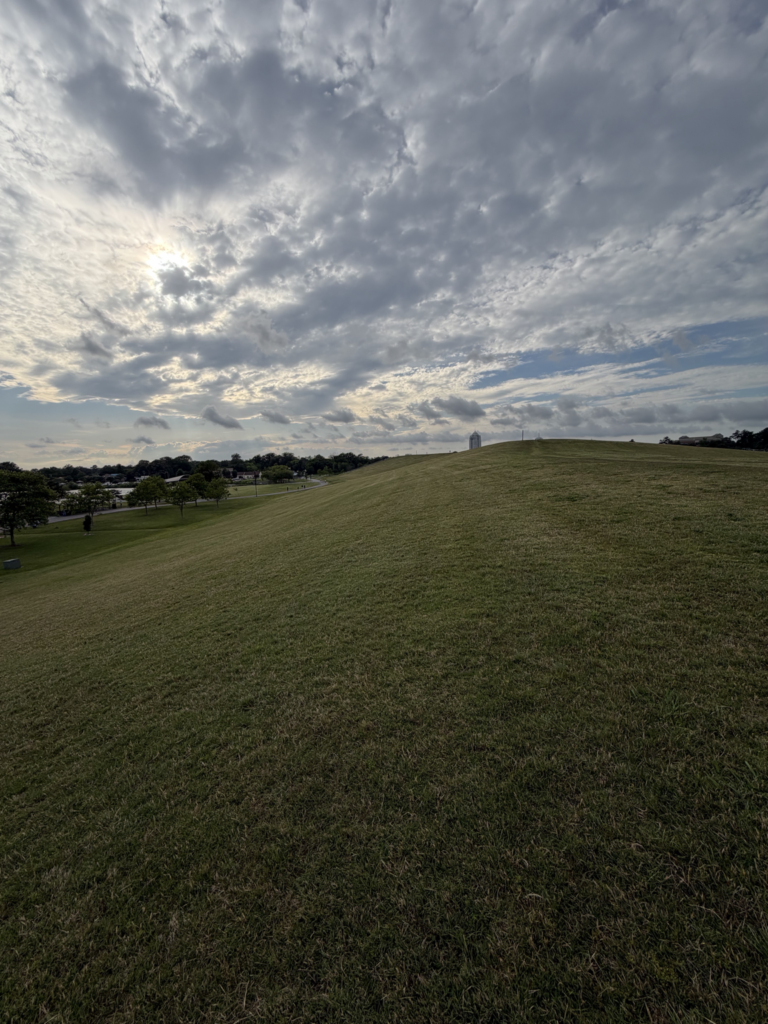
A geographical oddity. Most places try to hide what they once were. This one doesn’t.
Mount Trashmore is exactly what it sounds like: piles of trash transformed into a park. A big hill, a smaller hill, a few lakes, walking paths, playgrounds, and open green space stitched together where garbage once collected. On paper, it sounds ridiculous. In practice, it may be one of the smartest land use decisions Virginia Beach ever made.
The park was never supposed to be called Mount Trashmore at all. It was originally going to be named after the person who proposed the idea, but residents jokingly started referring to it as “Mount Trashmore” because of its resemblance to Mount Rushmore, and the nickname stuck.
For a moment, I wondered if the name carried some deeper meaning. In Scotland, “mòr” often means big or great, appearing in names tied to landscapes and landmarks. It felt strangely fitting here. But the truth was much simpler. Sometimes names survive not because they are elegant, but because they are memorable.
Walking through the park, I can understand why people love it. There is a little bit of everything for everyone. Wide open spaces. Curving paths. Hills that rise unexpectedly from an otherwise flat city. Virginia Beach is not known for elevation, yet this landfill-turned-park happens to be some of the highest ground in the area.
The hills themselves feel unusual because they are unusual. Their rolling shape looks natural from a distance, but nothing about them is natural at all. Beneath the grass, the trees, and the people flying kites or jogging past one another sits layer after layer of buried history.
Climbing to the top can be easy or exhausting depending on which side you approach from, but the view is worth it. Outside of the oceanfront, it may be one of the best views in the city. Standing there, I could not help but think about what rests beneath my feet. Countless objects discarded and forgotten. Things people once bought, used, broke, replaced, and eventually threw away.
Someone once looked at all of it and decided it was worthless.
Now it sits silently beneath the surface, slowly degrading and generating methane gas while an entirely different life unfolds above it.
It turns out trash is not always useless. At least not here.
The City of Virginia Beach took something no one wanted and transformed it into a place where people choose to spend their time. Children play here. Couples walk here. Families gather here. People exercise, reflect, and watch sunsets on top of what was once considered nothing more than waste.
Sometimes I wonder what people a thousand years from now might think of places like this. Perhaps future generations will mine old landfills searching for methane, precious metals, or materials we have not yet realized are valuable. Archaeologists study ancient civilizations through what they left behind. Maybe one day our trash will tell our story too.
The strange thing about Mount Trashmore is that it proves something most people overlook: even the things we discard continue shaping the world long after we stop thinking about them.